
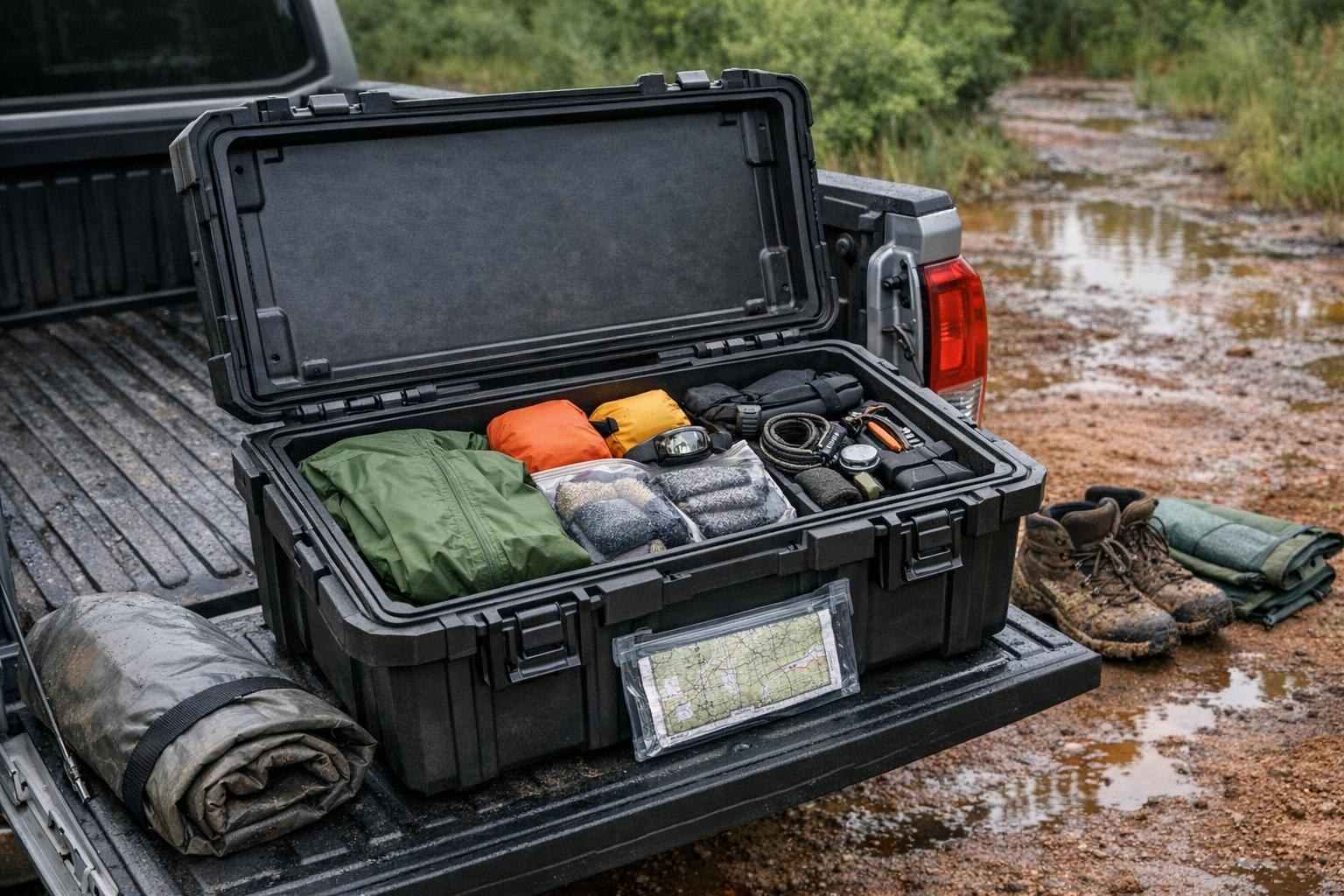
First, understand that what looks like a "fine" forecast can rapidly change while you are driving to the lease, trailhead or campsite. A wet map, dead headlamp and soaking wet spare shirt can rapidly turn what promised to be a short delay into a very long and miserable sojourn in the great outdoors. To be able to count on one or more items of gear to get you through such an event, it is best to keep an organized, outdoor-specific gear box of "just in case" items that you do not normally carry with you. And, it is best to opt for a gear box that is not too large in the first place.
Start with the moment the rain arrives
Most outdoor enthusiasts experience a short hunt or scouting trip followed by a rapid change in weather while driving back to their truck in Northeast Texas. A short rain can cause a lot of problems. This happens very fast. Your outer layer is packed away in your backpack and your phone is almost dead. Don't let these simple problems ruin your trip.
Be sure to pack only the items that need to be kept dry at the top of the box. Start with a good rain layer, a hat, some absorbent cloth, a light source (such as a headlamp), and a dry pair of socks. The small bag for wet clothing will keep the damp article from spreading moisture to the rest of the gear in the box.
Organizing gear will depend on how one uses their vehicle. For example, a hunter who walks from his truck to his blind would like to have immediate access to rain gear as well as to boot care. A camper on the creek would like to have room for dry fire starting materials as well as for camp repairs and extra layers of clothing for cold weather. Organize around the worst of the worst scenarios.
Choose waterproof storage that earns its space
A water-proof container is only useful if the lid shuts tight and you can identify what you are looking for when you reach for it. Look for a durable container with secure-closing lids that will not open when you are trying to reach something in the dark. Make sure the container is large enough to hold what you need and that it will not shift around in the truck when parked.
Just because you have brought waterproof storage does not mean that every item will remain dry. Eventually, condensation will set in, your hands will get wet and your gear dampened stored inside the container will leak. So it is best to store these sorts of articles in smaller, resealable bags or dry bags inside your main container. Clean items should be stored apart from wet items.
When you store your packed outside gear in a hot vehicle, periodically check your plastics, elastic, adhesives and rubber for signs of brittleness or other deterioration. Use clear labels on your containers and on the individual pouches within your storage containers to identify the contents by purpose: rain layer, light, map & compass, repair and camp.
Pack rain protection around real movement
Most rain jackets will suffice for a short dash for cover but will allow water in at various points (especially shoulders) for longer periods. A poncho is generally the best way to keep dry for longer but can be a bit of a nuisance as it can catch on branches. Look for one that can be secured under your pack to stop it flapping about. In terms of freedom of movement the best choice will depend on your activities, terrain and personal preferences.
Even if you are bringing a rain jacket, bring a dry change of base layers. Even though they be uncomfortable to wear for an extended amount of time, changing out of damp clothing as soon as possible will give you the most time on the property and eliminate the urge to leave early because of miserable conditions. Add to the container a light cap or hat with a brim, gloves for the time of year, and towels for drying off water from glasses, scopes, and other items that come into contact with the rain.
Spare socks are one of the most essential items to include in your vehicle's packing. A good way to keep them dry is to store them in a sealed container or bag and make sure your boots are in good condition and won't leak. Also, don't keep wet shoes in a closed container for an extended period of time. It can start to smell and even cause damage to the shoes' upper, stitching and insole.
Keep electronics, maps, and small tools separated
Lots of little failures happen when it starts to rain. Your phone won't work. Your radio won't contact anyone. The switch on your flashlight will get clogged with grime. Protect your electronic equipment by storing it in individual waterproof pouches. Bring a charging cable and have a spare power source for that particular piece of equipment. Test the cable before you head out to make sure it's not dead weight.
Maps and written documents of all types should have a "dry" copy also. Store maps and written documents in sealed sleeves, such as freezer bags, and include a pencil (or pens) for writing in them. Mark important locations (such as your vehicle), gates, and other notes about your route before leaving for your hunting trip. Also, verify local hunting regulations and the rules for the land where you will be hunting, as well as any specific rules of the landowner for whom you have permission to hunt.
An inconvenience to prevent a disaster. Bring enough durable tape, cord, zip ties, and a good quality multitool with a variety of fasteners to make immediate repairs. Even lock the zippers of bedding and clothing to prevent uncleanable mud getting into them. Make sure any repairs are done such that there is no danger of them failing when needed to ensure safety.
Reset the box after every wet outing
Remember that preparedness is a cycle of activity. Remove all wet clothing, open all bags and containers, and allow all items to dry. Wipe all containers of all debris and check all parts for flexibility. Restock all used first aid items, check batteries, and make sure all tools are returned in good working order and are stored in the proper place.
Before you head out again check your rain layer is still in the box and you have got some clean socks that have been sealed up all the time you've been out and about. Check that all your lights are working, you have got enough power in your phone and that your maps have been looked after. Make sure that all the items you need to get into your vehicle have been put in the box in a reasonable manner so you can find them in time of need.
This routine can also help you manage your impacts while on outdoor properties and help you become aware of packaging and wipes that you can pack out and throw away rather than leaving them on the property for other animals or children to use. Trash should be disposed of properly and don't leave temporary plastic or tape on brush, in ditches or around campsites.
Organize your gear and enjoy your time outdoors! If you have time to put together a box of gear before a trip, it will pay off in the end when the weather doesn't.